



What are the Types of Varicose Veins?
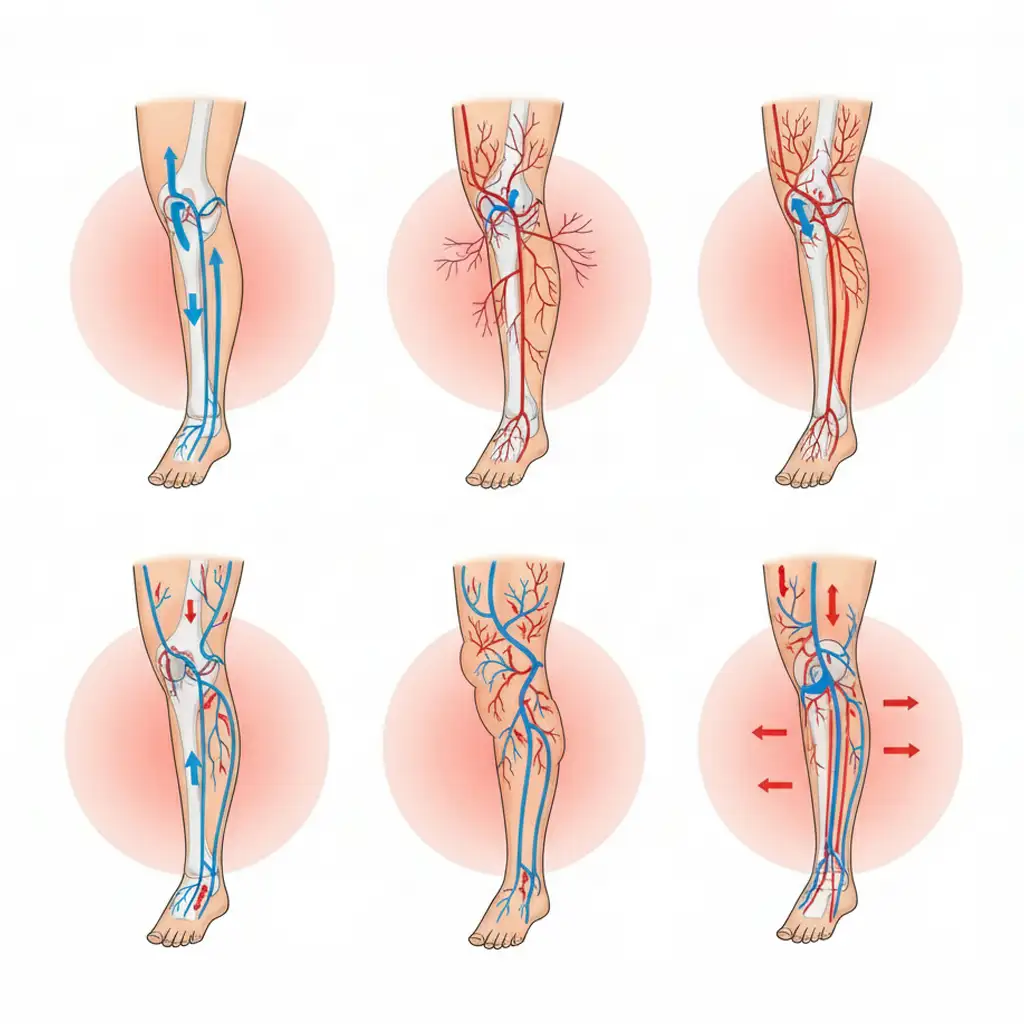
Varicose vein type, determines the applied treatment: for capillary lesions sclerotherapy or laser superficial applications; for large trunk varicose veins endovenous ablation or surgery more frequently comes to mind.
1) Capillary varicose vein (telangiectasia)
Very close to the skin, fine red–blue lines; known among the public as spider veins. Usually creates aesthetic concerns; pain is rare, sometimes a slight burning sensation may occur.
2) Reticular vein (medium size)
Blue or greenish, slightly raised veins from the skin. Compared to capillaries, the diameter is wider; can cause pain, fullness and heaviness sensation in the leg. Usually found together with capillary veins.
3) Large deep vein varicosity (main vein / trunk)
Distinct, curved, raised appearance from the skin. Can accompany the most serious clinical presentations: night cramps, pigmentation, lipodermatosclerosis, venous ulcer risk. In untreated cases, progressive venous insufficiency may be seen.
4) Deep vein varicose
May not always be seen from the outside; may be associated with collateral expansions after insufficiency or occlusion in the deep system. In advanced stages, regarding edema and circulation insufficiency, definitely requires specialist assessment.
